










An internal disciplinary decision within the Jama’atu Izalatil Bid’ah Wa Iqamatis Sunnah (JIBWIS) has spilled into the public arena, triggering fierce online debate and deepening conversations about religion, politics and insecurity in northern Nigeria.
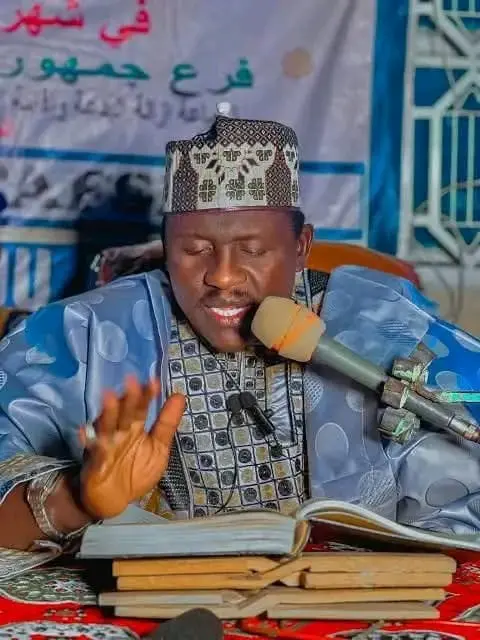
The cleric at the centre of the storm, Sheikh Alkali Abubakar Salihu Zaria, was suspended after delivering a Ramadan tafsir at Mokas Mosque in Damaturu, Yobe State, where he sharply criticised political leaders including Bola Ahmed Tinubu, over worsening insecurity.
During one of his sessions, Alkali condemned corruption and what he described as a lack of political will among leaders in the North-West to end killings, kidnappings and banditry.
“He said Today people are abducted and traded as though they are cattle. Somebody will be abducted and taken to bush. They then negotiate the ransom. Families implore, even though the abductors are complete ignorant. They will beat and kick their victims. Often they will stamp their feet on their victim’s stomach in Ramadan.”
He also warned against what he called blind reverence for political figures: “One of the signs of catastrophes this generation will likely face is the tendency to revere individuals out of fear of their machinations. Look at how states governors fear Tinubu much more than they fear Allah. If you are in APC you are treated like a saint. If you are a member of the opposition, you will be treated like a devil. One will be confronted with trump up charges. Who is Tinubu? You deceived us. You are a deceiver and cheat.”
Shortly after the sermon, a meeting reportedly convened by Muhammad Sani Yahaya Jingir, National Chairman of the JIBWIS Council of Ulama, alongside state and local leaders in Yobe, led to Alkali’s suspension.
He was accused of using strongly worded language and addressing insecurity in a manner said to be inconsistent with the organisation’s methodology.
Rather than push back publicly, Alkali responded with a message of submission and calm.
In a Facebook post, he described Jingir not just as a religious authority but as a father figure, urging followers to remain disciplined.
“To my followers, relatives and associates, I urge you to take heart. This was destined to happened. I cannot exceed the days Allah has written for me to lead Ramadan Qur’anic exegesis in Damaturu. I urge you to be disciplined and loyal. What Allah has decided is the best for us.”
The suspension has since ignited sharp reactions online.
A Facebook user, Yusuf Katagun, accused the Izala movement of contributing to the region’s political troubles:
“Izala is part of our biggest problems in the north. These are the same people who, in their loud voices and numbers, championed Muslim-Muslim ticket and brought this bad governance.”
He argued that the group’s leadership has remained silent at a time when moral voices are most needed.
Others, however, defended the disciplinary move. Ahmad Usman El-nafaty dismissed the cleric’s sermon as performance-driven: “There is nothing impressive in what Alkali said. It is theatrical. His plan is to cause some discontent among people. He is simply turning Tafseer sessions into comedy.”
But critics of the suspension insist clerics have a duty to speak truth to power. Ibraheem Ahmad wrote:
“Clerics are the last hope of the ordinary Nigerians. Many clerics called out Tinubu but they were not suspended because they did not endorsed Muslim-Muslim ticket.
“What Alkali said was the bitter truth. Islamic clerics should fear Allah. You are the representative of the people whose blood is being spilled.”
Another commentator, Datti Assalfiy, questioned whether political criticism should warrant disciplinary action at all:
“Politicians are irreligious. This is the reason the cleric is quiet these days.”




