










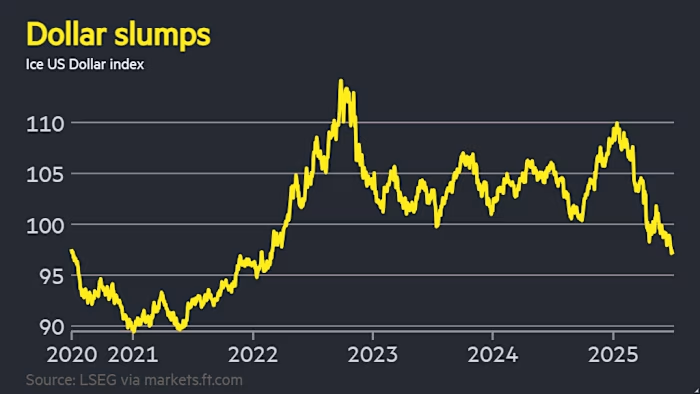

The U.S. dollar recorded a steep fall late in trading, slipping below the critical 96.00 support level and closing at 95.38, a move analysts described as historic.
The decline ran counter to long-held market behaviour, where geopolitical uncertainty and the risk of conflict typically drive investors toward the dollar as a safe haven.
As of 4:30 p.m. ET, the U.S. dollar sat at its weakest level since early 2022.
Despite persistent global instability and heightened tensions involving Iran, investors instead shifted away from the U.S. currency.
Market observers say the development has so far had only a modest effect on international trade in fresh produce.
READ ALSO: Naira Strengthens Against Dollar at Official Market
Leon Bol, a Dutch exporter with New Green in Poeldijk, said the fruit and vegetable export sector has not felt significant pressure from the latest currency movements.
“The biggest impact was already felt last year, when the dollar rose by 15%, and import tariffs of 15% were introduced. The increase of around 2 to 3% seen more recently is more in line with a United States that is increasingly focusing inward. In my view, this has relatively little effect,” Bol said.
He cautioned, however, that uncertainty remains around a major legal issue that could influence markets.
“There is still a major X-factor that could cause market disruption. The U.S. Supreme Court is expected to rule on whether the tariffs imposed by Trump on global trade are legally valid. If the Court were to decide that they are unlawful, the dollar could potentially fall to 1.25 or even 1.30,” Bol explained.
For now, Bol said North American demand is largely concentrated on niche agricultural products. “In addition, exports of Dutch aubergines have resumed,” he added, noting that items such as witlof, red chicory, and rhubarb continue to dominate shipments to the region.




