









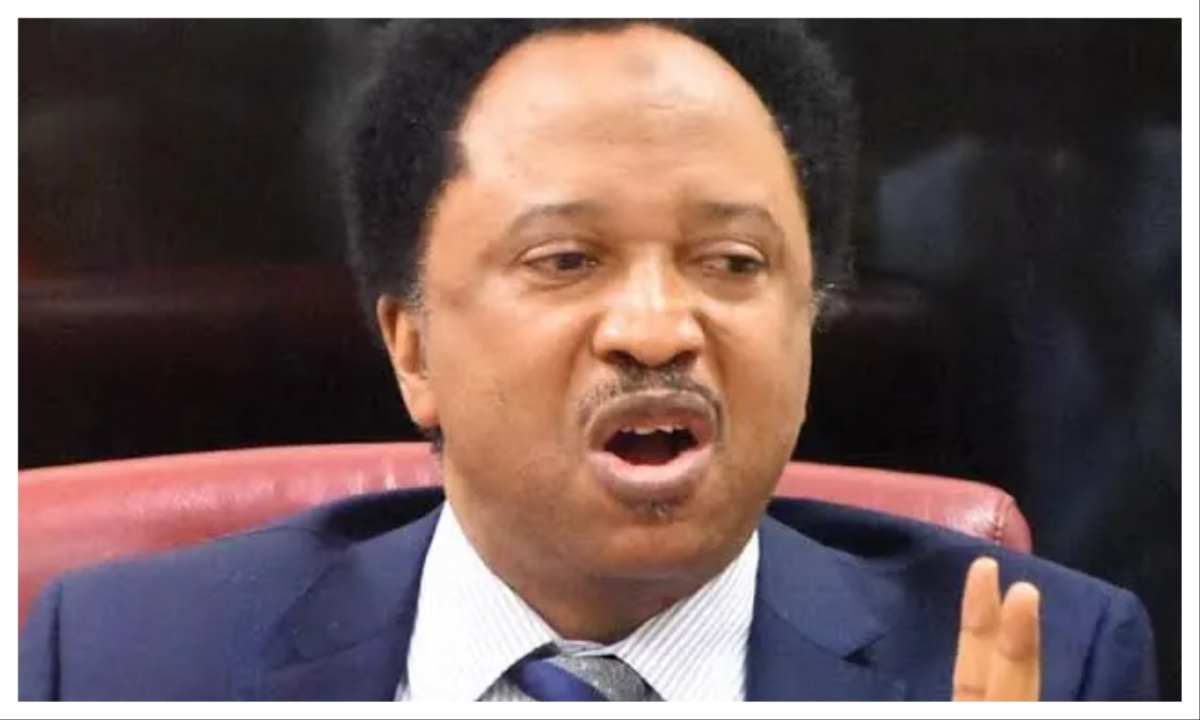

Former senator representing Kaduna Central, Shehu Sani, has cautioned that the electronic transmission of election results will not automatically deliver free and fair elections in Nigeria, insisting that electoral credibility ultimately depends on the intentions of those running the process.
Sani spoke on Wednesday during an appearance on Channels Television while reacting to the National Assembly’s recent amendment of the Electoral Act.
The development followed the Senate’s approval of electronic transmission of results, while retaining manual collation as a backup system — a decision that has triggered nationwide debate as well as protests outside the National Assembly.
Reacting to the controversy, Sani argued that the introduction of technology does not eliminate electoral malpractice, warning that those determined to manipulate the process would still find ways around any system.
“Electronic transfer does not mean that we’re going to have 100% free and fair election. There is no electoral system that those who intend to rig would not be able to circumvent. Now you have a manual voting and electronic transfer of results.”
He maintained that the major challenge is not the mode of result transmission, but the sincerity and commitment of election managers to fairness and transparency.
“When there is a genuine commitment to fairness, elections will be credible. However, if there is a deliberate plan to manipulate the process, loopholes will always be found,” he added.
Sani also raised concerns over the persistence of vote-buying and voter inducement, stressing that legal provisions alone cannot eliminate such practices across the country.
Read Also: Shehu Sani warns Nigerians to return home promptly amid US visa restrictions
“For example, now, you can have laws everywhere that voters should not be induced with money or anything material for them to vote, they will still do that and we don’t have the manpower to go to every nook and cranny to make sure people are not being induced,” he said.
While affirming his support for electronic transmission of results, the former lawmaker insisted that the Electoral Act must retain manual collation as an alternative, especially in situations where technical failures occur.
He warned against setting standards that may not be realistic, noting that even technologically advanced countries struggle with seamless nationwide electronic transmission of results within a short timeframe.
“Election takes place in one day and it is expected that results will be transmitted the same day,” he said.
”If there is no provision for an alternative, what becomes of it? Do we wait for the next day, two days, three days?
I think we should do what is practical. If it is difficult for even the most advanced nations to electronically transfer all their results, why do we want to force that on ourselves to that level?” Sani asked.
He concluded by defending the hybrid approach, stressing that a backup manual system should not be treated as a setback but as a practical safeguard.
“But the central point is that we say there should be electronic transfer of results and where there is a glitch or failure, we go to the manual. There should not be anything wrong with that.”