


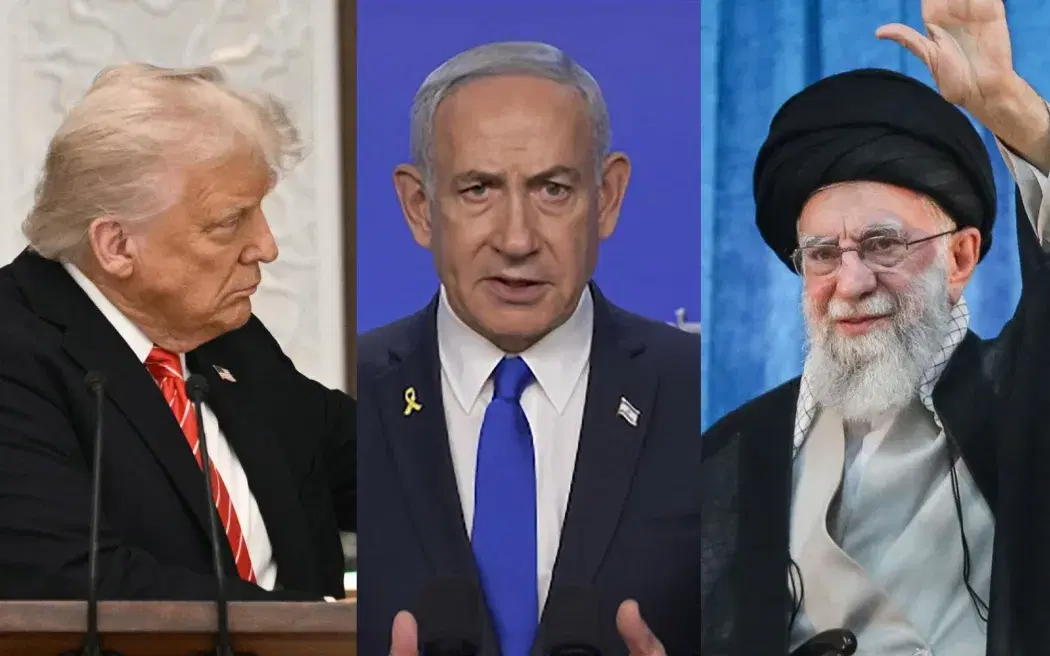


Diplomatic tensions linked to the escalating confrontation between Israel and the Islamic Republic of Iran have spilled into Nigeria, with both countries’ envoys in Abuja trading sharp accusations over alleged sponsorship of terrorism and influence in Nigeria and West Africa.
The dispute was triggered by comments from the Israeli Ambassador to Nigeria, Michael Freeman, who alleged that Tehran is actively sponsoring terrorism in Nigeria and across Europe.
Speaking in an interview on Arise TV in Abuja, Freeman accused Iran of using proxy networks to destabilise sovereign states and export its revolutionary ideology.
He pointed specifically to the Islamic Movement of Nigeria (IMN), describing the group as a proxy linked to Iran’s leadership and warning that Tehran’s structures are dedicated to spreading extremism beyond the Middle East.
According to the Israeli envoy, Iran’s activities extend far beyond its region, citing alleged terror operations in Argentina and Bulgaria as evidence of a broader global strategy.
Freeman also defended Israel’s ongoing military campaign against Iran, describing it as a necessary response to decades of hostility.
He said the offensive, which recently claimed the life of Iran’s Supreme Leader, Ayatollah Ali Khamenei, was driven by the need to prevent Tehran from acquiring nuclear weapons.
The Israeli ambassador described the military action as a “moral obligation” aimed at stopping a regime that, according to him, seeks to wipe Israel off the map.
But the Iranian government has strongly rejected the allegations.
In a response to the claims, the Iranian Ambassador to Nigeria, Gholamreza Mahdavi Raja, dismissed the accusations as baseless and part of a broader propaganda effort.
Speaking in an interview with Vanguard, Raja said the allegations that Iran sponsors terrorism in Nigeria or the wider Sahel region are “entirely unfounded.”
“Such allegations are entirely unfounded and form part of a propaganda campaign by a regime that has a long record of violence and violations of international law,” Raja said.
He argued that Israel was attempting to deflect international attention from its own record of what he described as “state terrorism.”
Raja also accused Israel of repeatedly violating international law through targeted killings beyond its borders.
He stressed that Iran has itself been a victim of terrorism over the years, with thousands of its citizens affected, and said the country remains committed to international cooperation in combating terrorism.
The Iranian envoy further sought to reassure Nigeria about Tehran’s intentions, describing relations between the two countries as cordial and based on mutual respect.
“Iran regards Nigeria as an important and influential country in Africa and seeks constructive, long-term engagement with Nigeria and all African countries,” he said.
According to him, cooperation between both countries spans several sectors including trade, education, culture, science, technology, health and diplomacy.
The exchange between the two diplomats comes against the backdrop of a rapidly intensifying conflict involving Iran, Israel and the United States.
In late February 2026, coordinated military strikes targeting Iranian cities and strategic sites triggered a fresh cycle of hostilities. The operations, named Operation Roaring Lion and Operation Epic Fury, reportedly struck air defence systems and nuclear infrastructure inside Iran.
Tehran responded with retaliatory strikes on Israeli territory as well as U.S. military installations in the Gulf.
The conflict has also expanded across the region, with Tehran-aligned groups such as Hezbollah launching rockets into northern Israel, prompting counter-strikes on Lebanese territory.
The crisis has begun to reverberate through global energy markets, particularly around the Strait of Hormuz, a critical route for international oil supplies.
Despite growing international concern, the conflict shows little sign of easing, as sustained military actions and deep diplomatic divisions continue to complicate peace efforts.
Raja, however, maintained that claims linking Iran to terrorism in Nigeria remain without evidence and urged the international community to rely on verifiable facts rather than politically motivated accusations.