


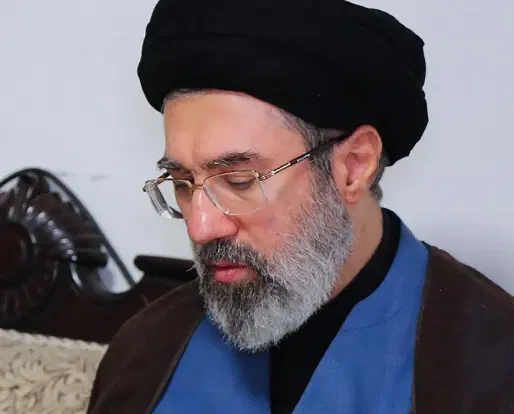


China has urged respect for Iran’s sovereignty and warned against targeting the country’s newly appointed supreme leader, Mojtaba Khamenei, after Israel threatened action against any successor to his father.
Beijing’s response came after Iran named Mojtaba Khamenei to lead the country following the killing of his father, former supreme leader Ali Khamenei, during the opening wave of US and Israeli strikes on Iran.
Speaking on Monday, Chinese foreign ministry spokesman Guo Jiakun said the leadership transition in Tehran was an internal matter determined under Iran’s own laws.
“Iran’s decision to appoint the younger Khamenei was ‘based on its constitution’,” Guo told reporters.
He added: “China opposes interference in other countries’ internal affairs under any pretext, and Iran’s sovereignty, security, and territorial integrity should be respected.”
Israel’s military has warned that it could target anyone who assumes the role of Iran’s supreme leader.
Meanwhile, US President Donald Trump has previously dismissed Mojtaba Khamenei as a “lightweight”, while insisting that Washington should have a role in choosing Iran’s next leader.
The diplomatic tension unfolds as fighting between Iran and its adversaries intensifies. Israel and the United States have continued pounding Iranian targets in recent days, while Tehran has responded with waves of missile and drone attacks against Israel and Gulf states hosting US forces.
China, a key partner of Iran, condemned the killing of the elder Khamenei but has also criticised Iran’s strikes on Gulf countries.
READ ALSO: Iran’s Supreme Leader, Ayatollah Ali Khamenei

Seeking to ease tensions, China’s envoy to the Middle East met Saudi Arabia’s foreign minister in Riyadh on Sunday to call for restraint. During the meeting, envoy Zhai Jun warned that the conflict risked spiralling further.
“China urges all parties to immediately cease military operations, prevent further escalation of tensions, and avoid causing greater harm to the people of regional countries,” Zhai told Saudi Foreign Minister Faisal bin Farhan.
Chinese Foreign Minister Wang Yi echoed that message a day earlier, saying the war “should never have happened” and urging an end to the fighting.
Beyond the immediate violence, the conflict is raising concerns about global energy supplies and trade routes critical to China.
More than 80 percent of Iran’s oil exports were shipped to China last year, according to data from analytics firm Kpler.
Even so, Iranian crude accounted for only about 13 percent of China’s total seaborne oil imports.