








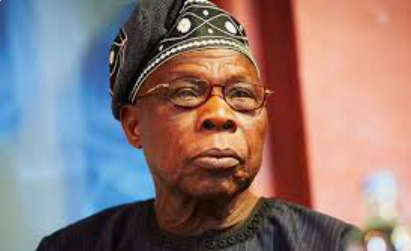

Former President Olusegun Obasanjo has reiterated his long-held position that Nigeria’s state-owned refineries may never function efficiently, even as the Nigerian National Petroleum Company Limited continues efforts to secure technical partners for their operation.
Speaking during a television interview on Sony Irabor Live on Saturday, Obasanjo argued that public-private partnerships remain the most viable model for sustaining critical national assets, citing the success of the Nigeria Liquefied Natural Gas project.
“One of the lessons that I learnt is that PPP (public-private partnership) works. Look, one project that has not been destroyed by the government in Nigeria is the NLNG (Nigeria Liquefied Natural Gas), where the private sector has 51 per cent, and the Nigerian government has 49 per cent,” he said.
He criticised the management of government-owned enterprises, pointing to the country’s refineries as a recurring example of systemic failure.
“The NNPC has refineries, and I said to people that it will never work. And a man had the audacity to say, ‘Am I a chemical engineer?” he added.
Obasanjo also recounted attempts made during his administration to involve international oil giant Shell in running the refineries, revealing that the firm declined both equity participation and operational control.
“Look, when I was there, I called Shell. I said, ‘Look, please, I beg you, come and take 10 per cent equity and run the refinery for us.’ They said no. I said, ‘Okay, if you don’t want to take equity, don’t take equity. Come and run the refineries. They said no,” he stated.
According to him, further discussions with Shell exposed structural issues affecting the refineries, including limited profitability in downstream operations, small processing capacity, poor maintenance, and corruption concerns.
“So, I called him, and I said, ‘Tell me, be honest with me. Why don’t you want to handle this?’ He said first, they want to let me know that they make most of their profits on the upstream, not the downstream.
“He said our refineries are too small… Number three: he said our refineries are not well-maintained… Number four, there’s too much corruption around our refineries, and they don’t want to be part of that,” Obasanjo explained.
The former president further disclosed that businessman Aliko Dangote had previously offered $750 million to acquire a controlling stake in two refineries, an arrangement later reversed by his successor, Umaru Musa Yar’Adua.
“Until one day, Aliko (Dangote) came and offered $750m to take two of the refineries; that will be 51 per cent… They brought the money, and they paid,” he said.
He, however, expressed disappointment that the deal was cancelled under pressure from the NNPC, warning that the facilities would eventually lose value.
“When I left office, NNPC went to my successor and convinced him… I said, ‘But you know that NNPC cannot run this thing.’ He said he knew… I said, ‘Look, when you sell these refineries, you will not get 200 million (dollars) for them, because you will sell them as scrap,’” he added.
Obasanjo also claimed that about $16 billion had been spent on the refineries over time, a figure he compared to the cost of building the privately owned Dangote Refinery.
“Only the present NNPC head has told the country the truth… I was told that they have spent about $16bn, which is only $4bn short of what Aliko used to build Africa’s largest refinery,” he said.
The comments come as the NNPC pursues a June 2026 deadline to finalise the selection of technical partners for the Port Harcourt, Warri, and Kaduna refineries, amid concerns about their efficiency and competitiveness.




