


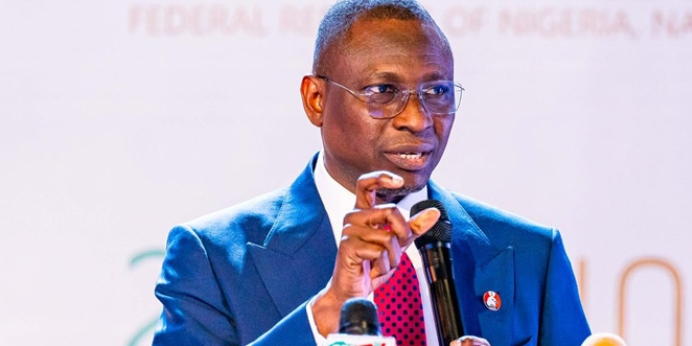


The Chairman of the Economic and Financial Crimes Commission (EFCC), Olanipekun Olukoyede, has warned of a growing cybercrime crisis within Nigerian universities, revealing that a significant proportion of students are involved in internet fraud.
Speaking at the 8th Biennial Conference of the Committee of Pro-Chancellors of State-Owned Universities in Kano, Olukoyede described the trend as deeply troubling. The conference, themed “Unlocking the Potentials of Artificial Intelligence: University Governance, Internationalization and Rankings”, brought together stakeholders to examine the role of technology in higher education.
Drawing from recent investigations and field operations, the EFCC boss said the scale of student involvement in cybercrime is alarming. “My research in the last one year has shown that about six out of 10 students in our universities are into cybercrime. It is a very disturbing situation,” he said, adding that the development is “a sad development,”.
He disclosed that many suspects arrested during anti-cybercrime operations were undergraduates, with some allegedly going as far as compromising academic systems by placing lecturers on their payroll.
Olukoyede linked the trend to broader institutional weaknesses, including gaps in oversight and administrative vulnerabilities within universities. He cited a major enforcement action in Lagos, where 792 individuals connected to a transnational cybercrime syndicate were apprehended, noting that a considerable number of those arrested were students.
According to him, the operation — driven by artificial intelligence tools — exposed the complexity and global reach of cybercrime networks operating within and outside Nigeria.
The EFCC chairman also raised concerns about the rise of “Yahoo Plus,” a practice that blends internet fraud with fetish activities, warning that the phenomenon reflects an increasingly dangerous evolution of cybercrime.
He urged university governing councils and administrators to act swiftly by tightening institutional controls and strengthening collaboration with law enforcement agencies. He also called for the adoption of AI-driven governance systems to improve transparency and accountability.
“A university that lacks financial accountability cannot credibly train future professionals. The integrity of our universities is a matter of national security,” he said.
Olukoyede noted that many institutions still rely on manual processes, making them susceptible to fraud schemes such as ghost workers, inflated contracts and fund diversion. He advocated the deployment of artificial intelligence in areas including payroll management, procurement monitoring, fraud detection and academic integrity enforcement.
He explained that AI tools can help identify suspicious financial activities, flag irregular salary payments and enhance real-time auditing processes, while also supporting investigations through digital forensics and financial tracking.
Despite the advantages, he cautioned that technology should not replace human oversight, stressing the need for compliance with data protection and procurement laws.
The EFCC chairman further called for increased investment in digital infrastructure, including broadband and cloud systems, alongside capacity building in cybersecurity, machine learning and digital governance.
He also encouraged closer collaboration between universities, regulatory authorities and anti-corruption agencies to effectively tackle emerging threats in the sector.